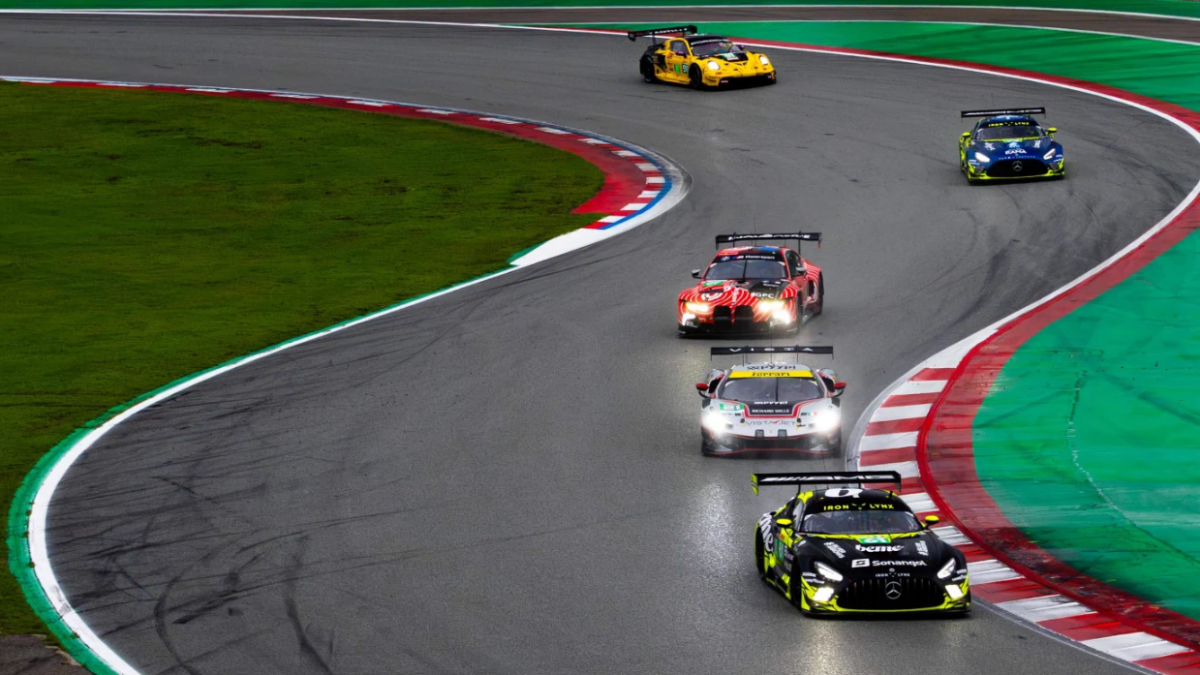
Motorsport extends well beyond cars racing for position on a track. It encompasses circuit racing, endurance events, off-road rallies, drag racing, and motorcycle competitions. Each discipline demands different skills, from managing tire wear over hundreds of laps to navigating unfamiliar terrain against the clock.
Speed matters, but outright pace rarely determines the result on its own. Drivers adapt to changing conditions, engineers balance performance with reliability, and teams make strategic decisions that can decide a race. Vehicle designs, race formats, and technical rules vary widely from one championship to another.
Understanding these distinctions makes motorsport easier to follow and reveals how driving skill, engineering, and race strategy shape the outcome.
What Is Motorsport?
Motorsport refers to organized competitive events involving motorized vehicles. It includes automobile and motorcycle racing, karting, truck racing, off-road competition, and events featuring specialized machines.
The motorsport meaning is broader than conventional wheel-to-wheel racing. Most disciplines determine results through finishing position, elapsed time, or distance covered within a specified period. Others use judged criteria. In drifting, for example, competitors are evaluated on their racing line, drift angle, and style rather than outright speed.
Motorsport also includes events that are not conventional races. Hill climbs challenge drivers to complete an uphill course in the shortest possible time, while rally crews tackle timed stages on asphalt, gravel, snow, or other surfaces. Endurance competitions place particular demands on consistency and mechanical reliability. Organized motor racing emerged alongside the automobile industry in the late nineteenth century. Early events tested speed, durability, and practical vehicle performance. The 1894 Paris–Rouen competition is widely recognized as an important milestone, although its evaluation criteria extended beyond simply reaching the finish first. Today, international and national organizations regulate competitive motorsport.
The Fédération Internationale de l’Automobile (FIA) governs many four-wheel disciplines, while the Fédération Internationale de Motocyclisme (FIM) oversees major motorcycle competitions. Individual championships establish sporting and technical regulations suited to their vehicles and racing formats.
What Are the Main Types of Motorsport?
Motorsport disciplines differ in where they compete, what vehicles they use, and how winners are determined. Circuit championships generally feature competitors sharing a closed track. Rally crews race against the clock on timed stages, while drag racing concentrates on acceleration over short distances. Other motorsport racing formats involve desert navigation, oval racing, or events where vehicles compete for many hours.
Circuit Racing and Formula Racing
Circuit racing takes place on closed courses, with events lasting a specified number of laps or a fixed period. Drivers typically compete on the track simultaneously, making overtaking, positioning, and traffic management essential. Formula racing is among the most recognizable categories. Its cars generally feature open wheels, single-seat cockpits, lightweight construction, and aerodynamic designs developed specifically for competition.
Formula 1 is the highest-profile international single-seater racing championship. Teams develop their cars within detailed technical regulations, seeking advantages through aerodynamics, power-unit performance, tire management, and race strategy. Formula 2 and Formula 3 provide important development pathways for drivers. Unlike Formula 1, both championships use standardized chassis and tightly controlled technical specifications to limit equipment differences. Other prominent circuit racing disciplines include:
- Touring car racing: Competition involving vehicles derived from production-car designs, often extensively modified for racing.
- GT racing: Championships featuring racing versions of high-performance road cars, including GT3 and GT4 categories.
- Stock car racing: A discipline closely associated with NASCAR, using specialized race cars on oval tracks and road courses.
- Motorcycle road racing: Competitions such as MotoGP, featuring purpose-built racing motorcycles.
Track layout plays a major role in how teams set up their cars. Fast circuits with long straights reward aerodynamic efficiency and high-speed stability, while narrow street courses place greater demands on braking, traction, and precise positioning. Starting procedures also vary. Some championships use standing starts, while others begin with rolling starts. Qualifying usually determines grid positions, although penalties and championship-specific rules can change the final order.
Rally, Endurance and Drag Racing
Not every motorsport discipline involves competitors circulating together on a conventional racetrack. Rallying, endurance racing, and drag racing follow different competitive formats.
Rally racing. Traditional stage rallying takes place on timed sections of closed roads or specially prepared routes. Crews normally start at intervals, with overall results calculated from accumulated stage times and applicable penalties. Drivers work with co-drivers who read pace notes describing upcoming corners, hazards, and changes in road conditions. These instructions are essential on long, complex stages where memorizing every corner is impractical. The World Rally Championship (WRC) features events on gravel, asphalt, and snow. Each surface requires different approaches to tire selection, suspension setup, braking, and traction management. Rally raid is a related but distinct discipline. Events such as the Dakar Rally involve long-distance navigation across challenging terrain. Competitors use roadbooks to follow prescribed routes while managing fuel, mechanical reliability, and the demands of successive stages.
Endurance racing. Endurance events measure performance over extended periods or fixed distances. Success depends on maintaining competitive pace while limiting mechanical problems, unnecessary stops, and costly mistakes. The 24 Hours of Le Mans is one of the best-known examples. Multiple drivers share each car, rotating during pit stops as teams manage fuel, tires, maintenance, and changing track conditions. Endurance races often feature several vehicle classes competing simultaneously. These may include purpose-built prototypes and GT race cars derived from production models, with separate classifications for each class. Multiclass traffic adds another challenge. Drivers must anticipate differences in acceleration, braking, and cornering speed while overtaking slower cars or allowing faster competitors through. Mechanical problems can turn a race around. Even a particularly fast car may lose substantial time through repairs, component failures, or unscheduled pit stops.
Drag racing. Drag racing tests acceleration over a short, straight course. Two competitors typically start side by side, with electronic timing equipment recording reaction times and elapsed times. Common distances include a quarter-mile and an eighth-mile. Certain professional categories use shorter courses. NHRA Top Fuel and Funny Car competitions, for example, run over 1,000 feet. Launch technique, traction, power delivery, and reaction time all affect performance. Depending on the class, competitors may use heads-up starts or handicap systems that account for differences in vehicle performance.
How Motorsport Competitions Work
Race formats differ across disciplines, but organized events generally follow established eligibility, technical, and sporting requirements. In circuit racing, a typical race weekend includes practice, qualifying, and competition sessions. Practice gives drivers time to learn track conditions, evaluate setup changes, and collect performance data. Qualifying establishes starting positions in many championships, using timed laps, knockout sessions, or other prescribed formats. Rally competitions follow a different structure.
Crews complete special stages against the clock, and their times are combined to determine the classification. Penalties may apply for procedural violations, missed checkpoints, or other infringements. Championship standings generally depend on points earned across multiple events. Depending on the series, additional points may be awarded for sprint race results, pole positions, or other achievements specified in the regulations. Several groups contribute to a motorsport team’s performance:
- Drivers and riders control their vehicles and make immediate decisions during competition.
- Engineers analyze performance data and recommend adjustments to handling, efficiency, and reliability.
- Mechanics and technicians prepare, inspect, maintain, and repair competition vehicles.
- Strategists assess race conditions, pit-stop timing, tire choices, and tactical options.
- Race officials oversee compliance with sporting rules, coordinate safety procedures, and review incidents that may require penalties.
Responsibilities differ between disciplines. Formula 1 teams can use extensive telemetry and strategic modeling during a race, while rally crews must make many decisions independently between service opportunities.
Motorsport Rules, Flags and Safety Regulations
Motorsport regulations establish competition procedures, control vehicle specifications, and reduce the risks associated with racing. Sporting rules govern starting procedures, overtaking restrictions, pit-lane conduct, penalties, and classification requirements.
Technical regulations determine vehicle eligibility, permitted modifications, and mandatory safety equipment. Flags and signaling systems communicate instructions to competitors. Their precise interpretation depends on the championship, although several signals are widely recognized in circuit racing.
| Flag | Common meaning |
| Green | The track is clear, and racing may proceed under normal conditions. |
| Yellow | A hazard is present. Drivers must slow down, and overtaking is generally prohibited in the affected area. |
| Red | The session or race has been stopped. |
| Blue | Warns a competitor about an approaching faster vehicle, often one attempting to lap them. |
| Black | Instructs the designated competitor to enter the pits and follow instructions from race officials, often because of a serious rules violation. |
| Black and white checkered | Indicates the end of a race or session. |
A yellow flag does not automatically mean a safety car has been deployed. Officials may use local yellow flags, full-course yellow procedures, virtual safety cars, or physical safety cars, depending on the championship and circumstances. Each procedure imposes specific restrictions on speed and overtaking. Some also regulate the gaps between competitors.
Vehicle safety has advanced considerably since the earliest motor races. Modern competition cars may feature reinforced survival cells, roll structures, fire suppression systems, racing harnesses, and energy-absorbing components. Formula 1 cars also use the halo, a cockpit protection structure intended to reduce the risk of head injuries from certain impacts and flying debris. Drivers commonly wear flame-resistant clothing, helmets, and head-and-neck restraint systems. Exact requirements depend on the vehicle category and governing regulations. Circuit safety measures include barriers, runoff areas, debris fencing, and access routes for medical and recovery personnel.
Street circuits present additional challenges because buildings and other permanent structures restrict available space. Motorcycle racing requires different protective equipment. Riders use specialized suits, helmets, gloves, boots, and, in many top-level categories, airbag systems that provide additional impact protection. These precautions reduce the likelihood and severity of injuries, but they cannot eliminate the inherent risks of competitive motorsport.
How Racing Cars Differ From Regular Cars
Road cars must balance comfort, durability, practicality, emissions requirements, and everyday usability. Racing cars prioritize performance within the limits of their competition regulations. Engine output is only one part of that difference. Suspension geometry, aerodynamics, braking capability, weight distribution, and tire construction all influence how quickly a vehicle can complete a lap.
Chassis and weight. Dedicated racing cars often use lightweight structures designed for stiffness and crash protection. Carbon-fiber composite monocoques are common in high-level single-seater racing, while other categories use steel spaceframes or reinforced production-based bodies. Lower vehicle mass generally benefits acceleration, braking, and cornering. However, minimum-weight regulations prevent teams from reducing weight without restriction.
Aerodynamics. Aerodynamic components control airflow around a vehicle. Wings, splitters, diffusers, and underbody surfaces can generate downforce, pressing the tires harder against the track without increasing the car’s static weight. Downforce improves high-speed cornering potential, but generating it often increases aerodynamic drag. Teams must balance cornering grip against straight-line performance according to the circuit layout.
Suspension and tires. Racing suspension is designed to maintain tire contact and control vehicle movement under heavy braking, acceleration, and cornering loads. Changes to springs, dampers, anti-roll bars, ride height, and wheel alignment can substantially alter handling. Competition tires are developed for specific operating conditions. Slick tires provide high levels of dry-surface grip, while wet-weather tires use tread patterns to channel water away from the contact patch. Temperature, pressure, and wear affect tire performance. Even a well-balanced car can struggle when its tires operate outside their intended temperature range.
Braking systems. Racing brakes must withstand repeated high-energy stops while delivering predictable performance. Formula 1 cars use carbon-carbon brake discs, while GT3 and many touring car championships rely on iron-based discs designed for repeated heavy braking. Brake temperature, cooling, and front-to-rear balance are critical. Excessive heat can reduce braking effectiveness, while unsuitable operating temperatures may compromise initial bite and consistency.
Powertrain and transmission. Competition vehicles may use naturally aspirated engines, turbocharged engines, hybrid systems, or fully electric powertrains. Sequential gearboxes are common across many racing categories because they allow rapid, controlled gear changes. Powertrains are developed around their intended racing conditions and technical restrictions, which may make them less suitable for ordinary road use. The gap between road and race cars varies by category. Some retain much of their production-car architecture; purpose-built prototypes share far less with vehicles sold to the public.
The Role of Technology and Engineering in Motorsport
Motorsport provides an environment for evaluating engineering solutions under demanding conditions. Components experience repeated mechanical, thermal, and aerodynamic stress, making performance and reliability central development priorities. Modern racing teams collect extensive information through sensors and onboard data systems. Depending on the championship, engineers monitor vehicle speed, throttle position, brake pressure, suspension movement, tire temperatures, powertrain behavior, and energy consumption. Telemetry helps identify where drivers gain or lose time.
A car may become unstable under braking, for example, or struggle for traction when accelerating out of a corner. Comparing data traces allows engineers to distinguish driving inputs from potential setup problems. Simulation plays a major role in vehicle development. Computational fluid dynamics (CFD) helps engineers analyze airflow before manufacturing physical components. Wind tunnels provide additional aerodynamic measurements, while driving simulators allow teams to evaluate setups and prepare for unfamiliar circuits. Track testing remains essential despite these advances. Real conditions introduce variables that simulations cannot always reproduce accurately. Hybrid powertrains have also changed racing technology.
Hybrid race cars can recover energy, store it, and deploy electrical power according to their system design and competition regulations. The technology is used in Formula 1 and selected endurance racing categories, where energy deployment and thermal management influence performance. Fully electric championships introduce different engineering priorities. Formula E places particular emphasis on powertrain efficiency, regenerative braking, battery management, and energy strategy. Racing programs have helped refine materials, electronic control systems, aerodynamic methods, and vehicle safety equipment.
However, competition-specific technology does not always transfer directly to production cars because of differences in cost, durability, and practical requirements. Championships also differ in how much freedom they give engineers. Some series permit extensive vehicle development, while others restrict components or introduce performance-balancing measures. Balance of Performance (BoP), commonly used in GT racing, aims to limit major differences between vehicle models through regulated parameters such as weight and engine output. Each approach places a different emphasis on engineering freedom, competitive balance, and driver performance.
How to Get Started in Motorsport
Entering motorsport does not necessarily require owning a professional racing car. Several disciplines offer accessible starting points, although costs, licensing requirements, and available events vary by location. Karting is a common introduction to circuit racing. It develops braking technique, racing lines, throttle control, and awareness of other competitors in lightweight vehicles that respond quickly to driver inputs. Rental karting allows beginners to gain experience without buying and maintaining their own equipment.
Competitive karting requires a larger budget, particularly when travel, tires, mechanical support, and entry fees are included. In the United States, autocross typically involves driving individually through a cone-marked course on pavement, with rankings based on elapsed time and penalties. Many events permit eligible street cars, making the initial equipment requirements lower than those of dedicated circuit racing.
Track days provide another introduction to closed-course driving. However, they are generally noncompetitive activities rather than sanctioned races. Overtaking rules, vehicle eligibility, safety requirements, and licensing procedures can differ substantially between track days and race meetings. Beginners interested in off-road competition can explore local rallycross events, while those drawn to stage rallying may start with navigation events, volunteer work, or introductory training programs. Motorcycle enthusiasts can begin with organized track schools and introductory racing programs before entering competitive events. Beginners can approach competitive motorsport in the following order:
- Choose a discipline. Consider circuit racing, karting, autocross, rallying, or another category based on interests and available resources.
- Find an established organizing body. National motorsport associations and recognized clubs publish information about sanctioned events and participation requirements.
- Learn the regulations. Review vehicle eligibility, protective equipment standards, flag signals, and competition procedures.
- Build driving experience. Instruction, supervised practice, and entry-level events help develop technique before progressing to faster categories.
- Prepare a realistic budget. Account for entry fees, equipment, transportation, consumables, maintenance, and potential repairs.
- Advance gradually. Higher levels generally demand more experience, technical preparation, and financial resources.
In the United States, organizations such as the Sports Car Club of America (SCCA) offer grassroots competition opportunities. Other countries have national sporting authorities and affiliated clubs that organize local events. Sim racing can help develop certain skills, particularly familiarity with racing lines, braking references, and racecraft. Consumer simulators cannot fully reproduce the physical forces, sensory feedback, or consequences of driving a real competition vehicle. Club racing, amateur karting, and local competitions allow enthusiasts to participate at different levels without pursuing a professional career.
FAQ
What is the difference between motorsport and auto racing?
Motorsport covers organized competition involving motorized vehicles, including cars, motorcycles, karts, and other machines. Auto racing refers specifically to automobile competition. All conventional auto racing falls within motorsport, but not every motorsport discipline involves cars.
What are the most popular types of motorsport?
Major categories include Formula racing, stock car racing, touring cars, GT racing, endurance racing, rallying, drag racing, and motorcycle racing. Formula 1, NASCAR, MotoGP, and the World Rally Championship are prominent examples, although popularity varies by region.
Is Formula 1 the fastest type of motorsport?
Formula 1 cars are among the fastest vehicles around many conventional racing circuits because of their acceleration, braking capability, and aerodynamic downforce. However, Top Fuel dragsters accelerate considerably faster in a straight line, while specialized land-speed vehicles achieve much higher maximum speeds.
Why do motorsport teams change tires during races?
Teams change tires because of wear, performance degradation, changing weather, or championship regulations. Fresh tires may improve grip, but pit stops cost time. The decision depends on whether the expected performance gain outweighs the time spent stopping.
Can beginners participate in motorsport without owning a racing car?
Yes. Rental karting, selected autocross events, and arrive-and-drive programs allow beginners to participate without purchasing a dedicated racing vehicle. Licensing, insurance, equipment, and eligibility requirements depend on the organizer and competition format.